Sterile pressure measurement for injectable manufacturing

GSKPharmaHeader_en-co

How sterile pressure measurement prevents contamination in injectable drug manufacturing

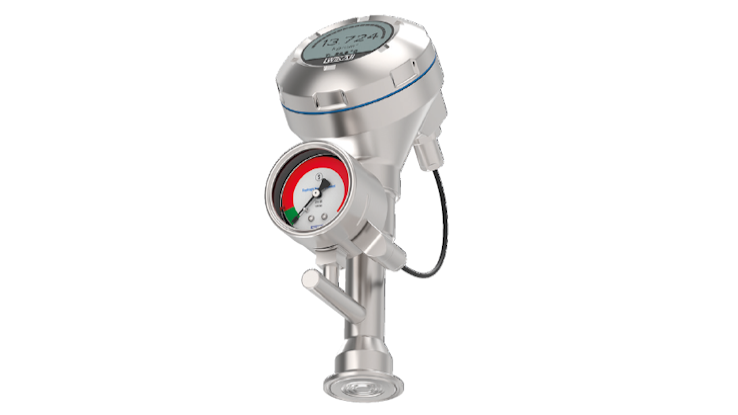
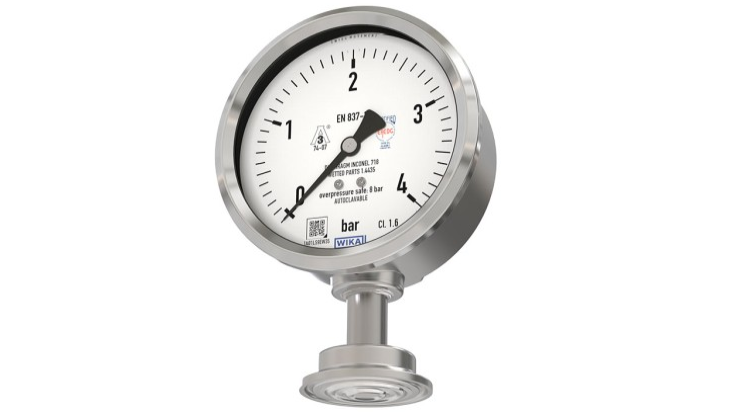
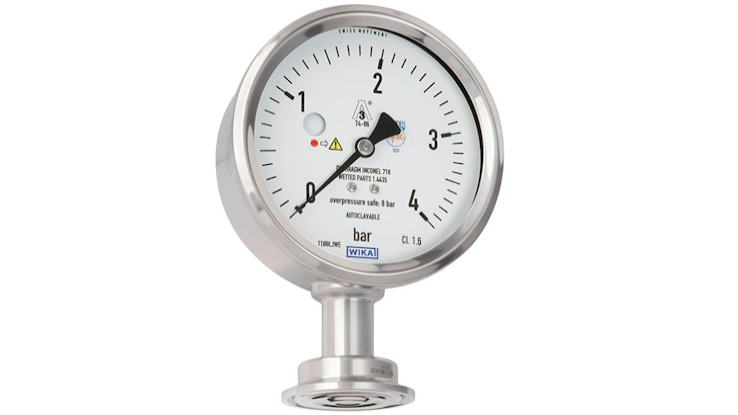
In the sterile production of injectable medicines, contamination must be ruled out at every step of the process, and even pressure measuring instruments must never become a source of contamination. Adopting a proactive approach to process safety, GSK’s Parma site equipped critical measuring points with two hygienic WIKA instruments: the DMSU21SA process transmitter with patented diaphragm monitoring and the “dry” PG43SA-S diaphragm pressure gauge. Together, these instruments eliminate the fill-fluid contamination pathway and enable instant detection of diaphragm rupture, thereby supporting reliable processes and ultimately ensuring patient safety.

"GSK Pharma"

“Our goal is to be proactive: rather than waiting for a problem to arise and then fixing it, we invest in state-of-the-art technology to prevent it, investing in the short term for a long-term benefit, and choosing the right partners to deliver that improvement.”

Alessio Casini
Sr. Instrumentation & Calibration Specialist
Utilities Department
GSK Parma

GSKPharmaAlessioCasini_en-co

Challenge

A product that leaves no room for error

Injectables are among the most sensitive pharmaceutical products because the active ingredient enters the body directly. This means that sterility throughout production is non-negotiable. Pressure gauges and transmitters are indispensable here. However, a damaged measuring diaphragm can allow product, transmission fluid or cleaning media to pass through unnoticed, while the instrument continues to indicate a plausible value. The defect can remain undetected.

Staying ahead of the risk

The stakes are high: biopharmaceutical material and every manufacturing slot are extremely valuable, so a discarded batch, a halted production line or a regulatory re-inspection would incur significant costs. Regulators have raised the bar too: with injectables in mind, the U.S. FDA introduced its New Inspection Protocol Project in 2018. GSK’s approach is to prevent such risks rather than react to them.

Solution

The right partner for a specific need

GSK’s relationship with WIKA was already well established via its automation supplier, FAST AUTOMATION. For this project, two specific instruments were decisive: a pressure gauge that measures without any transmission fluid, and a transmitter with an integrated diaphragm-monitoring system. From initial contact to completion, the project took around nine months.

Two instruments, two critical roles

The DMSU21SA transmitter monitors pressure in pre-formulation and recipe development, in filtration and in the steam and nitrogen supply that keeps conditions sterile after a SIP cycle. The tanks that hold and move the solutions between process steps have been equipped with the “dry” PG43SA-S pressure gauge. With both instruments, pressure measurement is no longer a potential blind spot in the process.


Benefits

Improvement that pays off

By instrumenting its critical pressure-measurement points with the DMSU21SA and the PG43SA-S, GSK has turned a potential blind spot into a controlled and transparent part of the process. The fill-fluid contamination route is removed by design, and any diaphragm damage becomes immediately visible, proactively contributing to process reliability and patient safety. Our collaboration continues, with temperature measurement as the next step.

  • Contamination pathway designed out: the “dry” pressure gauge works without any fill fluid
  • Failures made visible: a diaphragm rupture is detected and an alarm is triggered immediately
  • Process integrity maintained: the second diaphragm keeps the process sealed until repair
  • Built for sterile processes: hygienic, 3-A marked and ASME BPE compliant instruments for sterile production
  • Easy to integrate and retrofit: minimal effort, often over the existing 4–20 mA / HART® loop
  • Proactive by design: risk reduced precisely at the critical measuring points, supporting patient safety

GSKPharmaZippJoachim_en-co

“With a dry sensor there is no transmission fluid that could contaminate the product, and continuous diaphragm monitoring reports any damage immediately. This combination is exactly what sterile processes need: safety built into the measuring point itself.”

Joachim Zipp
Global Market Segment Manager Food & Pharma, WIKA


Pressure measurement solutions for sterile pharmaceutical processes

Why contamination control is critical in injectable manufacturing

Direct route to the patient: injectables bypass the body’s natural defences, so sterility is non-negotiable
Hidden failures: a damaged diaphragm can continue to show a plausible value while contamination goes unnoticed
High cost of failure: discarded batches, downtime and regulatory re-inspection
Demanding conditions: mechanical stress during handling, SIP steam and pressure peaks

Related solutions, products and technologies


Learn more about our customer success stories


Contact

Do you want to protect your sterile processes against contamination starting at the measuring point? Talk to us about hygienic pressure measurement for pharmaceutical and biotechnological applications: