Green ammonia – hydrogen carrier for a carbon-neutral world
Over 70% of ammonia is currently used in fertiliser production, with the rest serving as refrigerant and chemical feedstock. Green ammonia, made from renewable hydrogen and nitrogen, is gaining importance as a carbon-free energy carrier. Liquefied at -33 °C, it allows safe and efficient hydrogen transport over long distances. At the destination, ammonia can be cracked back into hydrogen, enabling flexible access to clean energy. It will also be used directly as marine fuel, powering ships without CO₂ emissions – a key step toward decarbonising global transport and industry.
Key pathways in green ammonia production
At WIKA, we empower our customers to lead the transformation with a comprehensive portfolio of smart instrumentation solutions tailored to every stage of the green ammonia value chain. Our instruments help you achieve reliable, efficient and safe operations – from hydrogen production to ammonia synthesis, storage and cracking – so you can confidently meet your sustainability goals.
The water electrolysis unit is the starting point of the green ammonia production process. Powered by renewable energy from wind or solar sources, this unit splits purified water (H₂O) into hydrogen (H₂) and oxygen (O₂) through electrolysis.
The green hydrogen produced is a critical feedstock for ammonia synthesis when combined with nitrogen from the air separation unit. Technologies such as PEM, alkaline and solid oxide electrolysis cells (SOEC) are used depending on efficiency, scale and integration needs. This unit enables carbon-free hydrogen supply, anchoring the sustainability of the entire power-to-X value chain.
With WIKA’s precision measurement solutions, you can ensure optimal performance, safety and compliance in your water electrolysis operations – maximising the value of your investment in green hydrogen.
In the green ammonia production process, the air separation unit (ASU) plays a critical role by extracting nitrogen (N₂) from ambient air. This nitrogen is a key reactant in the synthesis of ammonia (NH₃) when combined with green hydrogen produced via water electrolysis.
The ASU typically uses cryogenic distillation to separate air into its primary components such as nitrogen, oxygen and argon, delivering high-purity nitrogen essential for efficient and sustainable ammonia synthesis. Integrated into the broader power-to-X value chain, the ASU supports decarbonisation by enabling a fossil-free pathway to ammonia production.
By integrating WIKA’s high-accuracy instrumentation, you achieve reliable nitrogen extraction and process stability, supporting efficient and sustainable ammonia synthesis while minimising operational risks.
The ammonia synthesis unit is the heart of the green ammonia production process. It combines green hydrogen produced via water electrolysis and nitrogen extracted from ambient air through the air separation unit under high pressure and temperature using the Haber-Bosch process. This catalytic reaction forms ammonia (NH₃), which can then be stored, transported or used directly as a carbon-free energy carrier.
The unit is optimised for efficiency and sustainability, enabling a fossil-free pathway to ammonia production within the power-to-X framework. WIKA’s advanced sensors and transmitters enable you to monitor critical parameters in real time, ensuring efficient conversion, process safety and consistent product quality – helping you meet production targets and sustainability goals.
The chilling and separation unit is the final stage in the green ammonia production process. After synthesis, ammonia gas is cooled down to approximately -33 °C using a series of heat exchangers and ammonia chillers.
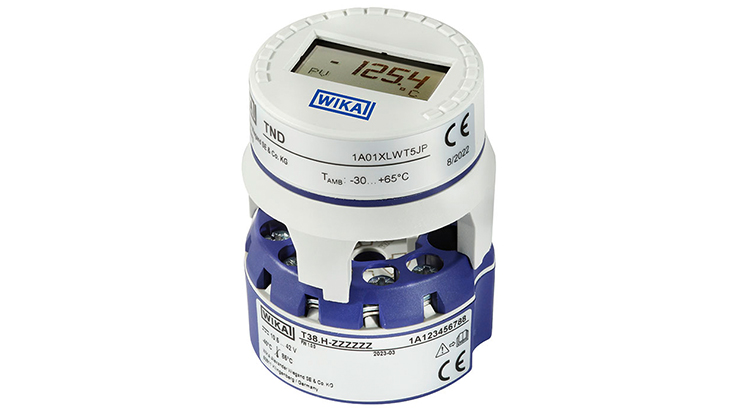
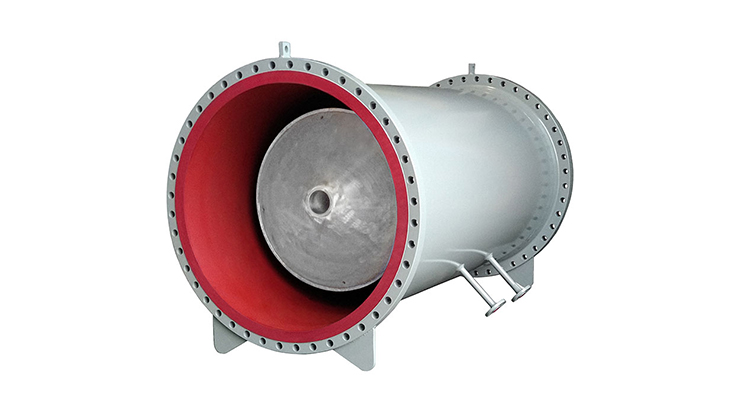
This cooling process condenses the ammonia into a liquid state, enabling efficient storage and transport. Simultaneously, unreacted gases are separated and recycled back into the synthesis loop. Precision instrumentation, such as level indicators, process transmitters, temperature transmitters and flow measuring instruments, ensures stable operation, energy efficiency and safe handling of cryogenic conditions.
WIKA’s instrumentation provides real-time monitoring and control during liquefaction and separation, helping you maintain energy efficiency, prevent losses and ensure safe handling of cryogenic ammonia.
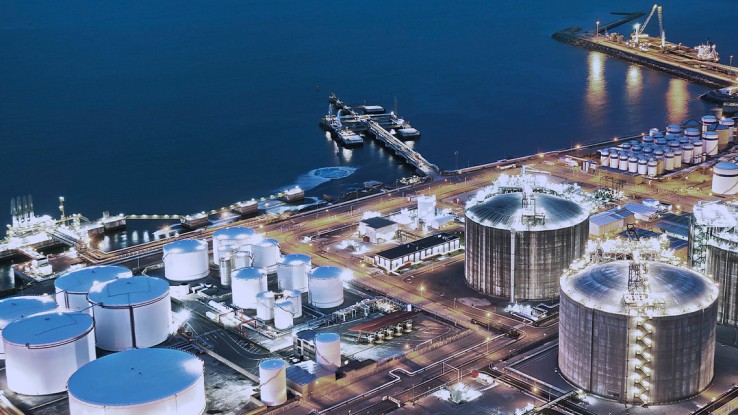
The ammonia storage unit is a critical component in the green ammonia value chain, designed to safely contain liquefied ammonia at cryogenic temperatures around -33 °C. These storage tanks are typically double-walled for thermal insulation and safety, ensuring stable containment of NH₃ before it is transported or used downstream.
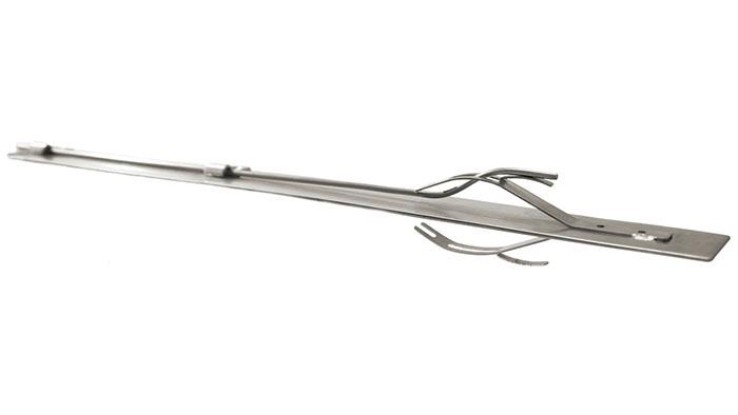
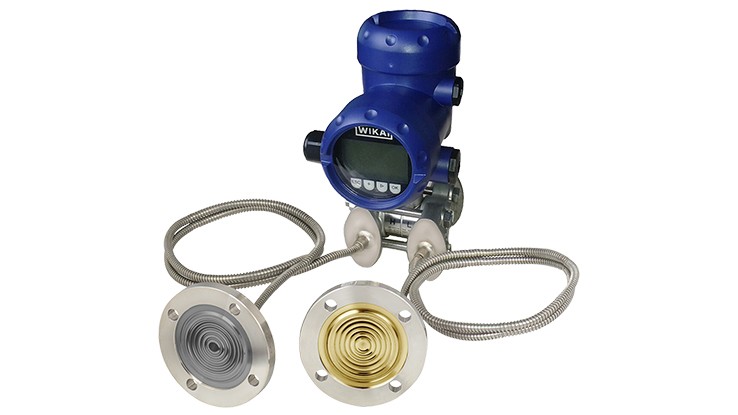
Advanced level and pressure instrumentation such as radar sensors, hydrostatic transmitters and multipoint thermocouples enable precise monitoring and control. This unit acts as a buffer between production and distribution, supporting both local consumption and global export of green ammonia as a carbon-free energy carrier.
By choosing WIKA’s advanced instrumentation, you ensure safe, efficient and compliant ammonia storage – protecting your assets and supporting reliable supply for your customers.
The ammonia cracking unit enables the reverse transformation of green ammonia into hydrogen, making it a key enabler for hydrogen distribution and utilisation. Through a high-temperature catalytic process, ammonia (NH₃) is thermally decomposed into nitrogen (N₂) and hydrogen (H₂), which can then be used as a clean fuel for power generation, industrial processes or mobility applications.
Technologies such as Haldor Topsoe’s H₂Retake™ and Syzygy Plasmonics’ all-electric cracker are advancing the efficiency and scalability of this process. The unit is typically equipped with fired reformers or electric heaters, and instrumentation solutions are critical for monitoring temperature profiles, catalyst performance and gas composition. This step closes the loop in the green ammonia value chain, enabling flexible and carbon-free energy delivery.