Detect hot spots before they become failures.
The linear sensor for hot spot detection (TCC) is a linear temperature sensor that continuously measures the maximum temperature anywhere along its entire length by creating a virtual measuring point (virtual hot junction) at the hottest location. Identify abnormal temperature rise early, before it leads to shutdowns, safety risks, or damage.
Continuous temperature monitoring across your entire asset — with one sensor.
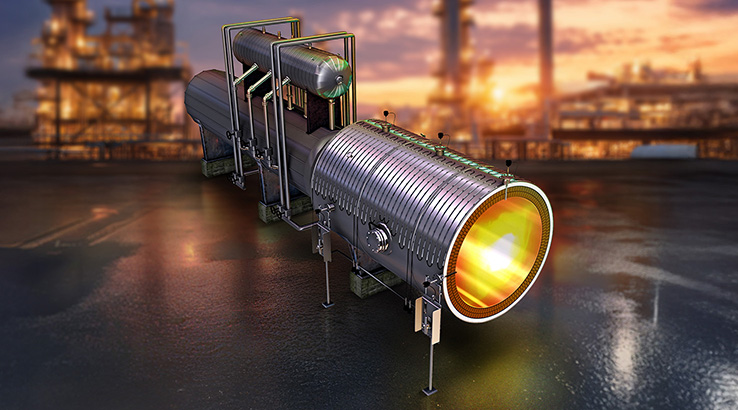
Why TCC instead of conventional sensors?
Continuous temperature monitoring across your entire asset — with one sensor. Identify abnormal temperature rise early, before it leads to shutdowns, safety risks, or damage.
- Point sensors only measure one fixed location.
- Hot spots move — and often go undetected.
- Multiple sensors increase cost and complexity.
TCC solves this with one continuous sensor that captures the maximum temperature anywhere along its length — in real time.
Protect uptime. Reduce risk. Simplify monitoring.
Engineered outcomes that matter to your operations team.
Linear sensing. Proven reliability
Virtual hot junction. Real-time detection
Self-restoring. Ready for continued monitoring
How it works: early refractory damage detection for your SRU unit
The TCC sensor continuously forms a virtual measuring point at the hottest location — ensuring you always capture the most critical temperature, without needing multiple sensors. Discover how a leading refinery uses WIKA TCC sensors to detect refractory damage and protect floating roof tanks before failures happen — reducing risk and unplanned downtime.
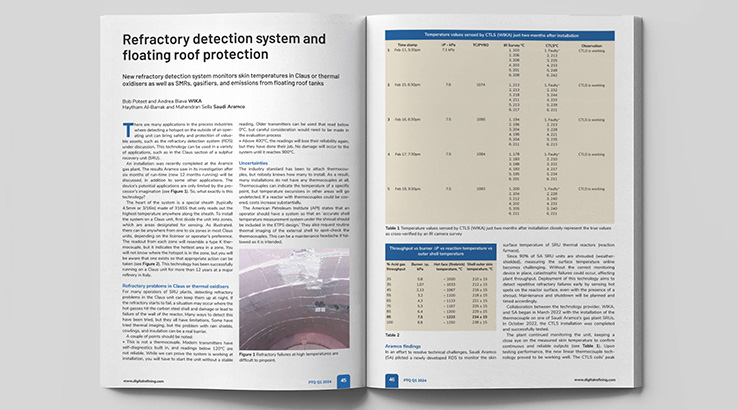
From hidden hot spot to avoided shutdown:

One sensor. Critical outcomes across industries.
With continuous detection of the maximum temperature along its entire length, the TCC is suited for applications that require extended area monitoring and early identification of abnormal temperature developments.
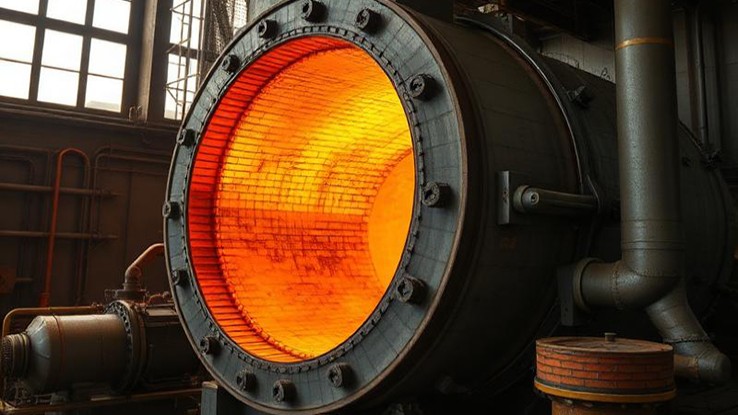
Refractory-lined reactors
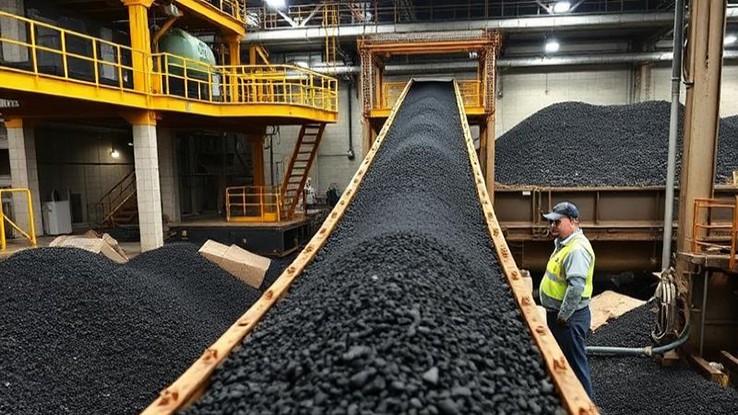
Coal conveyors

Floating roof tanks
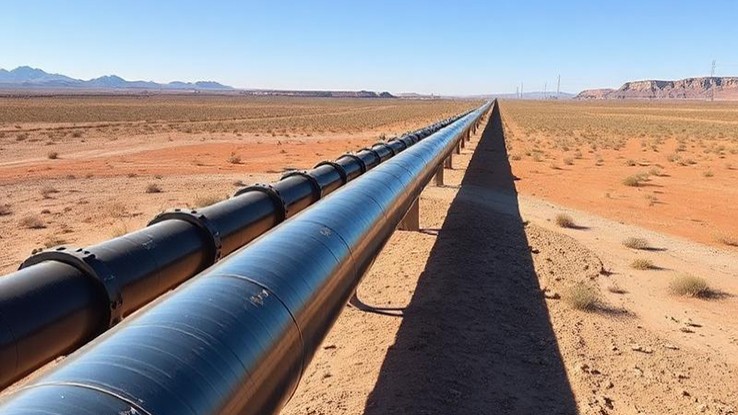
Pipeline monitoring

Fire detection systems
Protect your critical assets from hidden hot spots.
Speak to our temperature measurement experts to identify the right solutionfor your application.
FAQ: Refractory Failure Detection and Hot Spot Monitoring in Oil & Gas and Petrochemical Plants
What is refractory failure in a reactor or furnace?
Refractory failure occurs when the protective refractory lining inside a reactor, furnace, reformer, heater, or process vessel deteriorates, cracks, erodes, or becomes detached from the vessel wall. This can expose the steel shell to excessive temperatures and eventually lead to equipment damage, production losses, or safety risks.
Early detection of refractory degradation is critical in refineries, petrochemical plants, ammonia plants, hydrogen units, sulfur recovery units, and other high-temperature processes.
How can refractory failure be detected before catastrophic damage occurs?
One of the most effective methods is continuous temperature monitoring of the external shell surface.
An abnormal increase in shell temperature often indicates deterioration of the refractory lining. Continuous monitoring allows operators to identify developing hot spots before shell temperatures reach critical levels.
WIKA's Model TCC linear temperature sensor is designed specifically for detecting refractory failures by continuously measuring temperatures along the entire sensor length.
What is a hot spot in a refinery or petrochemical reactor?
A hot spot is a localized area where the temperature becomes significantly higher than surrounding areas.
Hot spots may be caused by:
- Refractory degradation
- Insulation damage
- Process imbalances
- Catalyst issues
- Burner malfunctions
- Excessive reaction temperatures
If left undetected, hot spots can accelerate equipment degradation and increase the risk of unplanned shutdowns.
Why are traditional thermocouples often insufficient for hot spot detection?
Conventional thermocouples measure temperature only at a single fixed point.
If the hot spot develops between measurement locations, it may remain undetected.
The WIKA TCC uses a virtual measuring junction that continuously detects the highest temperature along the entire sensing length, helping identify hot spots even when their location changes.
What is the difference between a linear temperature sensor and a conventional thermocouple?
A conventional thermocouple measures temperature at one predefined junction.
A linear temperature sensor operates continuously along the sensing cable and identifies the maximum temperature over its complete length.
The WIKA TCC creates a virtual hot junction at the hottest point on the sensor, enabling continuous monitoring over large surface areas.
Which refinery and petrochemical applications benefit from hot spot detection?
Hot spot monitoring is commonly used on:
- Hydrogen reformers
- Steam methane reformers (SMR)
- Ammonia converters
- Methanol reactors
- Sulfur recovery units (SRU)
- Ethylene furnaces
- Catalytic reactors
- FCC units
- Fired heaters
- Refractory-lined vessels
Continuous monitoring helps improve plant reliability and process safety.
How does the WIKA TCC help identify the location of a hot spot?
The TCC continuously measures temperature along its entire length.
By installing multiple sensors across a vessel or reactor shell, operators can monitor different zones and localize hot spot development more effectively.
Can the sensor detect moving hot spots?
Yes.
One advantage of the WIKA TCC technology is its ability to detect the maximum temperature point even when the hot spot moves to another location along the measuring length. The sensor continuously adapts to changing temperature profiles.
What temperature range can be monitored?
The WIKA TCC is designed for process temperatures up to 400°C (752°F) during operation and uses Type K thermocouple conductors.
What industries use continuous hot spot monitoring?
Typical industries include:
- Oil refining
- Petrochemicals
- Fertilizer production
- Hydrogen production
- Ammonia manufacturing
- Methanol plants
- LNG facilities
- Chemical processing
- Energy and utilities
These industries frequently rely on refractory-lined equipment where early hot spot detection is essential.
How does continuous hot spot monitoring improve plant safety?
Continuous monitoring helps operators:
- Detect refractory degradation earlier
- Prevent shell overheating
- Reduce risk of equipment damage
- Improve turnaround planning
- Reduce emergency shutdowns
- Enhance process safety
Early intervention can significantly reduce operational risk.
What are the signs that a reactor may have refractory damage?
Common indicators include:
- Abnormally high shell temperatures
- Rapid temperature increases
- Uneven temperature profiles
- Recurring hot spots
- Rising maintenance requirements
- Visible shell discoloration
Continuous temperature monitoring provides early warning of these conditions.
Is the WIKA TCC suitable for large vessels and reactors?
Yes.
The linear sensing concept allows extensive coverage of large vessels, reactors, and process equipment. Multiple sensing strings can be installed to monitor critical areas and identify developing hot spots across large surfaces.
Why are refinery operators replacing point temperature measurement with continuous monitoring?
Refinery operators increasingly require earlier detection of refractory deterioration.
Continuous monitoring provides:
- Better coverage
- Earlier warning
- Reduced inspection uncertainty
- Improved asset integrity management
- Enhanced reliability programs
These advantages help support predictive maintenance and risk-based inspection strategies.
What is the best technology for detecting refractory failure in reactors?
The most effective approach depends on the application, but continuous linear temperature monitoring offers significant advantages over single-point measurements for detecting developing hot spots and refractory degradation.
The WIKA TCC linear sensor was specifically developed for applications such as refractory-lined reactors, providing continuous temperature measurement over the entire sensor length and helping operators identify hot spots in real time.